
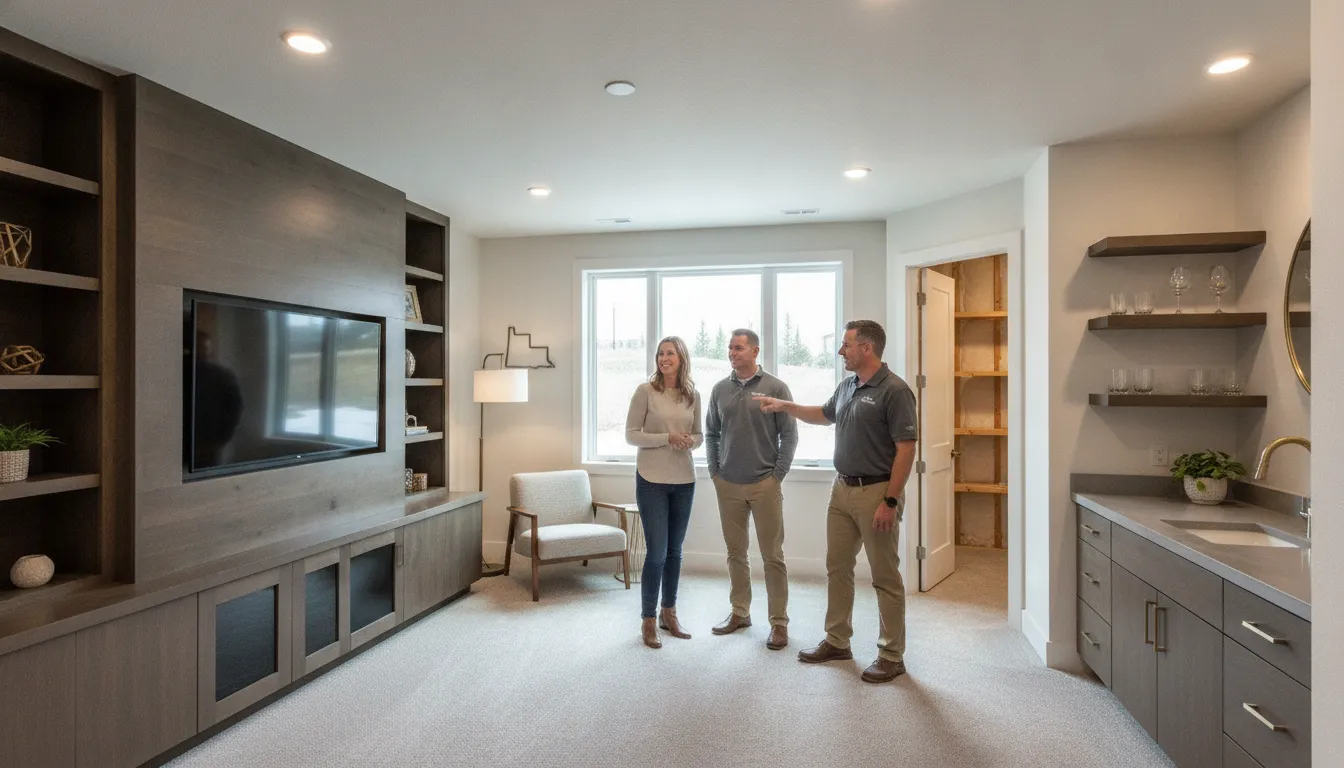
That unfinished basement may hold the extra space your household needs, but getting it ready for daily use requires careful planning. Before construction begins, you’ll want to know whether the space needs moisture repairs, a new layout, updated wiring, or plumbing for a bathroom or wet bar. Basement finishing contractors can help manage some or all of this work, depending on their services and your project. The challenge is knowing how to choose a contractor and what a thorough estimate should include. We’ll walk through the key decisions, from checking credentials and past projects to discussing timelines, permits, costs, and written agreements.
Key Takeaways
- Look for relevant basement experience: Review similar projects and ask how the contractor addresses moisture, safety, permits, and inspections.
- Compare estimates line by line: Check included work, materials, exclusions, timelines, payment terms, and how changes will be approved.
- Confirm the contractor is a good fit: Verify licensing, insurance, service area, availability, and who will manage the project from start to finish.
What Services Do Basement Contractors Offer?
Basement contractors may manage a project from initial planning through the final finishes, or handle only selected parts of the work. The right scope depends on your basement’s condition and how you plan to use the space. Before comparing estimates, ask what each contractor will take care of, what other trades they’ll coordinate, and what responsibilities remain with you.
Design, planning, framing, insulation, drywall, and finishes
A contractor can help shape your ideas into a practical layout for a family room, guest suite, home office, or play area. Planning may include wall placement, doors, storage, and any repairs needed before construction begins. Once the layout is set, the work may include framing, insulation, drywall, trim, and paint.
Ask whether design support is included or handled separately, and confirm which materials and finishes are part of the estimate. Some finishing scopes also include HVAC, electrical work, flooring, and permits. The basement finishing cost calculator shows examples of tasks that may be included, though your project’s needs will depend on its plans and existing conditions.
Flooring, lighting, electrical, plumbing, bathrooms, and wet bars
Finishes and utility work help determine how comfortable and useful your basement will be. Flooring choices may include carpet, tile, or other materials selected for the room’s purpose and conditions. Lighting can combine ceiling fixtures, recessed lights, and task lighting. Electrical work may include new outlets, switches, or circuits.
A bathroom, wet bar, or laundry area adds plumbing to the project, along with additional fixtures and finish choices. Ask contractors to list the planned work, materials, and fixtures in their estimates. That detail makes it easier to compare proposals with similar scopes. This basement remodeling cost guide outlines common cost categories, but use it as a general reference rather than a Utah-specific quote.
Planning, trade coordination, permits, and inspections
Basement projects can involve electricians, plumbers, HVAC technicians, and other trades. Your contractor may coordinate their schedules, track progress, and make sure each part of the work fits the overall plan. Confirm who will serve as your main contact and who will address scheduling questions or changes along the way.
Permits and inspections may be required, depending on the work and local rules. Ask who will confirm requirements, apply for permits, and arrange inspections. A project budget should account for materials, labor, permits, and a contingency for unexpected work, as noted in this basement remodeling planning guide. For a basement or larger remodel in Utah, contact Red Rooster Construction to discuss your plans and confirm whether the project is a fit for the team.
How Do You Find Reputable Basement Contractors Nearby?
Start with contractors who serve your part of Utah and have experience with projects like yours. Finishing a basement can involve framing, flooring, electrical work, plumbing, moisture control, and several other trades. The right contractor should understand how those pieces fit together and be able to explain what your plans may require.
Use several sources to build a shortlist: recommendations from homeowners, recent reviews, project photos, and local contractor listings. Then check each company’s credentials and ask how it handles communication, scheduling, inspections, and unexpected repairs. These details can help you assess the work as well as what it may be like to work with the contractor.
It’s also useful to talk with more than one contractor and share the same project details with each. Compare how they assess your basement, explain their recommendations, and answer questions. A clear, considered conversation can help you understand the project before you commit. The steps below can help you narrow your options and find a contractor whose experience matches your plans.
Ask homeowners and read recent basement-project reviews
Ask neighbors, friends, and other local homeowners who have recently finished a basement which contractor they hired. Find out what the experience was like beyond the final result: Did the contractor communicate clearly, keep the work area orderly, and explain schedule or cost changes? Answers can reveal details that photos alone won’t show.
Read recent reviews, paying attention to repeated comments rather than relying on a single glowing or critical post. Look for specific details about work quality, timelines, communication, and how the contractor handled challenges. The CCS of Utah guide to choosing a basement finishing contractor recommends contacting references so you can ask direct questions about how a project was managed. When possible, speak with homeowners whose basement plans were similar to yours.
Search local directories; verify licenses and insurance
Local business directories and contractor listings can help you identify companies that serve your area. Before you move forward, verify that a contractor holds the appropriate Utah license for the work. The state’s Division of Professional Licensing contractor resources provide information for checking licensing details. For electrical or plumbing work, ask who will complete it and confirm that qualified, licensed professionals are involved.
Request current proof of insurance, including general liability coverage and workers’ compensation where applicable. If you have questions about a certificate, contact the insurer to confirm the policy is active. These checks don’t guarantee a smooth project, but they help you screen contractors and understand how potential risks are handled. As CCS of Utah explains, hiring an insured contractor can help protect you from liability if someone is injured on your property.
Review portfolios and ask for references from similar projects
Browse each contractor’s portfolio for basements similar to the one you want to create. A family room may call for different experience than a basement with a bathroom, wet bar, or several finished rooms. Look closely at the layout, finish quality, and details that matter to your plans. Urban Matter’s advice on choosing a basement remodeling contractor recommends reviewing past work to assess a contractor’s quality and professionalism.
Ask for references from homeowners whose projects had a similar size or scope. Find out what work was included, whether the finished project matched the agreed plans, and how the contractor handled changes or unexpected issues. If possible, visit a completed basement or speak with the homeowner directly. Recent, relevant examples offer a better sense of a contractor’s experience than broad claims alone, and can help you decide whether their work suits your home and priorities.
What Should You Compare When Choosing a Contractor?
A detailed estimate is important, but it’s only one part of the decision. Compare each contractor’s basement experience, communication style, project management, and knowledge of local requirements before you choose.
Check experience with basement layouts, moisture, and your project scope
Basements bring challenges that above-ground rooms don’t, including limited natural light, below-grade walls, and potential moisture issues. Ask how each contractor approaches insulation, ventilation, lighting, and water management. The finished space should look inviting and stay comfortable and dry.
Look for projects similar to yours. If you’re planning a bathroom, guest suite, home theater, or wet bar, ask to see examples and find out who handled the plumbing and electrical work. Relevant experience can help a contractor identify practical considerations early, such as bathroom placement or updates to existing systems. Basement finishing guidance also points to moisture control, insulation, and lighting as important areas to discuss.
Compare communication, availability, management, and timelines
Ask who your main point of contact will be and how often you can expect updates. A clear communication plan helps you track decisions, get answers, and address concerns before they affect the work. Find out who will coordinate subcontractors and manage the day-to-day schedule.
Discuss the contractor’s current workload and the proposed timeline, including major milestones. Inspections, material availability, and unexpected conditions can affect a remodeling schedule. Ask how the contractor will explain delays, share schedule updates, and document changes to the plan. Look for someone who sets realistic expectations and responds promptly when you have questions. These tips for choosing a basement remodeling contractor also emphasize responsiveness and open communication when plans change.
Confirm knowledge of local codes, permits, and inspections
Basement projects may require permits and inspections, particularly when they involve structural changes, electrical or plumbing work, or a new bedroom. Requirements vary by location, so ask who will determine which permits apply and coordinate inspections. Confirm whether those responsibilities belong to you or the contractor, and make sure the agreement spells them out.
Check that the contractor has the appropriate Utah license and insurance for your project. You can verify a contractor’s license with Utah’s Division of Professional Licensing. Ask for references from recent basement projects, too. Former clients can share how the contractor handled permits, inspections, communication, and any issues that came up during construction.
What Affects Basement Finishing Costs?
Basement finishing costs depend on the space’s condition, the work involved, and the finishes you choose. Use general estimates to begin planning, then ask a Utah contractor to assess your home and prepare a project-specific quote.
Use general cost ranges as a starting point, not a Utah-specific quote
National estimates can help you set an initial budget, but they can’t predict what your basement project will cost in Utah. One guide puts the average basement finishing project at about $32,000, with reported costs ranging from $2,800 to $100,000. That wide range reflects differences in basement size, existing conditions, labor, and project scope.
Treat these figures as a starting point, not a guaranteed price. Local labor and material costs, as well as the needs of your home, affect the final estimate. Red Rooster Construction’s Utah home-building cost guide offers local context, but a contractor will need to review your basement and plans to provide a relevant estimate.
Compare square-foot prices with the scope and finish level
A square-foot estimate is useful only when you know what work it covers. A basic finish may cost less than a complete remodel with standard finishes, a bathroom, or a wet bar. One basement finishing cost guide gives broad benchmarks of about $7 to $23 per square foot for a basic finish and $32 to $80 per square foot for a more complete remodel. These are general figures, not Utah-specific pricing.
Ask each contractor to list the included work and materials. Check whether the estimate covers framing, insulation, drywall, flooring, lighting, and any electrical or plumbing work. Comparing estimates for the same scope and finish level will give you a more useful view of the costs than comparing square-foot prices alone.
Budget for repairs, permits, electrical or plumbing work, and contingencies
Before finishing begins, your basement may need repairs or upgrades. Look for signs of moisture, drainage problems, or damaged materials, and ask whether the electrical or plumbing systems need changes. Adding a bathroom, laundry area, or wet bar can also increase the project’s scope. Confirm whether permit costs and inspections are included, and clarify who will handle the applications.
Set aside funds for unexpected work that may come up once walls or floors are opened. Basement remodeling guidance recommends allowing for unforeseen costs. Ask contractors what contingency makes sense for your project and how they’ll get your approval before doing work beyond the agreed scope.
How Do You Address Basement Moisture, Safety, and Codes?
A basement should be dry and safe before it gets new walls, flooring, or fixtures. Ask contractors how they’ll assess moisture, choose materials, plan exits and ventilation, and handle permits and inspections. These decisions can affect your layout and budget, so make sure you understand the plan before work begins.
Fix leaks, drainage, and humidity before finishing surfaces
Ask the contractor to look for signs of water intrusion, including damp walls, stains, musty odors, or water near the foundation. Leaks, poor exterior drainage, and high indoor humidity can all cause problems. Finishing over an unresolved moisture issue can damage materials and create conditions for mold growth. Ask what the estimate includes for investigating and repairing the source, and how the contractor will get your approval if additional work is needed. In Utah, it’s also worth discussing how snowmelt and heavy rain may affect drainage around your home. Moisture control should be addressed before framing and finish materials go in.
Ask about moisture-resistant materials, insulation, and mold prevention
Basements have different conditions from rooms above ground, so ask which insulation, framing methods, and finish materials suit your space. The contractor should explain how the planned wall assembly will manage moisture and reduce the chance of condensation behind finished surfaces. Pay particular attention to areas near foundation walls, bathrooms, and laundry rooms. Ask how the team will keep materials dry during construction and what they’ll do if they uncover mold or water damage. A contractor with basement renovation experience should be able to explain these choices clearly and outline any related costs before work starts.
Confirm plans for ventilation, egress, and inspections
Ask how the design will meet applicable requirements for ventilation, ceiling height, and emergency escape. A basement bedroom may need an approved egress window or another exit, while bathrooms and enclosed spaces may need ventilation. Requirements can vary by location and project, so ask your contractor to confirm the rules with your local building department. Clarify who will apply for permits, schedule inspections, and take care of any required corrections. Basement finishing requirements can affect the layout, so settle these questions before finalizing plans. Include permit responsibilities and inspection milestones in your written agreement.
What Should You Check in an Estimate and Contract?
A clear estimate and written contract spell out what your basement project includes, how much it will cost, and how the work will be managed. Read both before signing, and ask the contractor to explain anything that is unclear. Getting the details in writing helps you compare bids and set shared expectations before construction begins.
Review the itemized scope, materials, allowances, and exclusions
Check that the estimate describes the work in practical detail, including demolition, framing, insulation, drywall, flooring, lighting, and finish work as needed. It should identify the materials or quality levels included, so you can tell whether two bids cover comparable work.
Look for allowances for items you’ll choose later, such as tile, cabinets, or fixtures. Ask how the contractor will handle a selection that costs more or less than the allowance. Also review exclusions carefully: repairs, debris removal, or certain electrical and plumbing tasks may not be included. A detailed basement project estimate can help you compare proposals based on scope, materials, and costs rather than the total price alone. If you’re weighing a larger project budget in Utah, Red Rooster’s home-building cost guide offers additional context.
Clarify schedules, cleanup, changes, payments, and permit responsibilities
Ask for an estimated start date, major milestones, and a completion window. Basement projects often involve several trades, so find out who coordinates their work and how you’ll hear about schedule changes. Confirm what the contractor will do to protect your home, clean the work area, and remove construction debris.
The contract should explain how to request a change, how the contractor will price it, and whether it could affect the schedule. Review the payment schedule and make sure each payment is tied to a clearly defined stage of work. Also confirm who obtains permits and arranges inspections. A written agreement should spell out these responsibilities, along with how changes are approved, as outlined in this guide to choosing a basement remodeling contractor.
Check warranty terms and how the contractor handles concerns after the project
Ask what the contractor’s warranty covers, how long it lasts, and how to submit a request if an issue comes up. Materials and systems may also have separate manufacturer warranties, so clarify which documents you’ll receive and who to contact for each type of concern. Get warranty terms in writing, including any conditions or exclusions that apply.
It’s also useful to understand how the contractor communicates during construction and handles the final walkthrough. Confirm who your point of contact will be and how concerns will be documented and addressed. Before signing, make sure the contract explains the process for post-project questions and warranty requests. Clear expectations can help you get timely answers and know what steps to take if a repair is needed.
Should You Hire a Basement Specialist or General Contractor?
The best fit depends on your plans. A basement specialist may suit a standalone finishing project, while a general contractor can be helpful when the work connects to a larger renovation. In either case, look for relevant experience and a clear plan for managing the details.
Match basement expertise to your project’s complexity
Basements come with considerations that may not apply to above-grade rooms, including moisture, insulation, ventilation, lighting, and safe exits. Ask contractors how they’ve handled similar conditions, especially if your plans include a bathroom, wet bar, or layout changes. Reviewing completed projects and speaking with references can help you assess the quality of their work and how they solve problems. A basement contractor checklist can also help you prepare questions about experience, planning, and communication. Choose someone who can explain the reasoning behind their recommendations in plain language.
Ask who coordinates subcontractors, permits, inspections, and schedules
Basement work may involve several trades, including framing, electrical, and plumbing. Before signing, ask who will coordinate subcontractors, handle permit applications, arrange inspections, and share schedule updates. Clarify who your main point of contact will be and how the contractor will communicate changes or delays. Make sure these responsibilities, along with the expected schedule, appear in the written agreement. Ask past clients whether the contractor kept them informed and managed the work as planned. A project plan and estimate can make it easier to understand the proposed work and compare contractors.
Consider whether the basement work is part of a larger remodel
For a standalone basement finish, a contractor with substantial basement experience may be a good match. If the project is tied to an addition, kitchen remodel, or other changes, consider a general contractor who can coordinate the work across your home. Ask how they’ll manage connected projects, keep decisions consistent, and communicate with you throughout construction. Clear communication matters when work in one area affects the timing or design of another. Red Rooster Construction offers custom home building, remodeling, and additions in Utah. Contact the team to discuss your plans and determine whether your basement project is a fit.
How Do You Choose a Remodeling Partner for Your Utah Home?
The right remodeling partner should understand your goals, communicate clearly, and have the time and experience to take on your project. Use these conversations to check whether the contractor’s services and approach fit your home.
Confirm service area, availability, and fit for your plans
Before comparing estimates, confirm that the contractor works in your area and has availability that suits your timeline. Red Rooster Construction serves homeowners in Salt Lake, Davis, Summit, Tooele, Weber, Wasatch, Morgan, and Grand counties, as well as other communities along the Wasatch Front. Ask whether the team has experience with projects like yours and knows the requirements in your city or county.
Share the basics of your plans, including the basement’s size, the changes you want, and any known moisture or structural concerns. Ask who will manage the work, how updates will be shared, and what the next steps look like. You can also verify a contractor’s credentials through Utah’s license lookup. These checks help you assess whether the contractor’s experience, schedule, and working style suit your household.
Ask Red Rooster Construction if your basement or larger remodel is a fit
A basement finish may be a stand-alone project or part of a larger remodel that includes an addition or updates to other rooms. When you reach out, explain what you hope to accomplish, your preferred timing, and your priorities, such as adding a bathroom, guest space, or family room. Ask which parts of the work Red Rooster Construction can handle and how the team would manage the project.
Red Rooster takes a hands-on approach to construction and directly sources materials, but every project has its own needs. Share your location and scope with the Red Rooster team to ask whether your basement or broader remodel is a fit. A straightforward conversation can clarify potential next steps and help you decide whether to request a project discussion.
Browse the project gallery and contact the team to discuss your plans
Reviewing a contractor’s past work can help you assess the quality and style of their projects. Browse the Red Rooster project gallery, and note details that appeal to you, such as finishes, layout choices, or how rooms connect. If you see a project similar to yours, ask what the work involved and whether the team can share relevant references.
When you speak with the contractor, bring a clear wish list and be open about your priorities, budget, and timing. Ask how material choices, project scope, and any required permits could affect the plan. A useful first conversation should give you room to explain your ideas and hear practical options for your home. That exchange helps establish whether you and the contractor share an understanding of the work ahead.
Related Articles
- 15 Smart Basement Remodel Ideas for Your Home — Red Rooster Construction
- How Much Does It Cost to Finish a Basement? — Red Rooster Construction
- Walkout Basement House Plans: Utah Cost & Design Guide — Red Rooster Construction
- Home Remodeling 101: Your Complete Guide — Red Rooster Construction
- Split Level House Guide: Layouts, Pros and Cons — Red Rooster Construction
Frequently Asked Questions
What should I ask a basement contractor before requesting an estimate?
Share how you want to use the space, any known moisture or repair concerns, and the features you’re considering, such as a bathroom or guest room. Ask what the contractor will include, which trades they’ll coordinate, and whether permits and inspections are part of the proposed scope.
Should basement moisture problems be fixed before remodeling?
Yes. Ask a contractor to investigate signs such as dampness, stains, or musty odors and address the cause before installing finished walls or flooring. Covering an unresolved moisture issue can damage materials and affect the finished space.
Will a basement bedroom need an egress window?
It may. Requirements depend on the project and local building rules, so ask your contractor to confirm what applies before finalizing the layout. Permits and inspections may also be required.
How can I compare basement remodeling estimates fairly?
Compare the work, materials, allowances, and exclusions in each estimate, not just the total price or cost per square foot. Confirm how each contractor will handle changes, cleanup, scheduling, permits, and inspections.
Does Red Rooster Construction take on basement projects in Utah?
Red Rooster Construction works across several Utah counties and communities along the Wasatch Front, but project fit depends on the location and scope. Share your plans through the contact page to discuss next steps.
Planning a project in Utah?
Talk with Red Rooster Construction about your build, remodel, or outdoor space.
Request a Quote